Deep Plane Facelift Risks
A deep plane facelift carries risks including hematoma (2–4%), temporary nerve weakness (<1%), infection (<1%), and scarring. Serious complications are rare when performed by an experienced, board-certified surgeon. Most side effects — swelling, bruising, tightness — resolve within 2–4 weeks.
Many patients arrive at my Antalya clinic having encountered one of two extremes online: content that barely mentions complications, or articles that make this safe procedure sound far more dangerous than it is. Neither serves you. In this guide, I walk through every risk category honestly — what it is, how common it actually is, what we do to prevent it, and what happens if it occurs.
"My goal is not to frighten you — it is to make sure that if you choose this surgery, you do so with complete information and realistic expectations. A deep plane facelift is one of the most effective facial rejuvenation procedures available. It is also real surgery with real risks — and every patient deserves to understand both."
1. Is Deep Plane Facelift Safe? The Evidence
Yes — when performed by a qualified, experienced surgeon, a deep plane facelift has a well-established safety profile comparable to or better than traditional facelift techniques. A 2025 systematic review and meta-analysis reported an overall haematoma rate of 2.7% and a major haematoma rate of 0.97% for deep-plane facelifts. Facial nerve injury rates are reported at under 1% for permanent deficits.
The key variable in risk is not the technique itself — it is the surgeon's training, experience, and understanding of deep facial anatomy. Surgeons who have trained specifically in this technique and perform it regularly can navigate its structures safely.
| Complication | Reported Rate |
|---|---|
| Hematoma (any) | 2–4% |
| Major hematoma requiring drainage | < 1% |
| Temporary facial nerve weakness | < 1% |
| Permanent facial nerve injury | < 0.1% |
| Infection | < 1% |
| Skin necrosis | < 0.5% |
| Revision surgery for asymmetry | 1–3% |
Source: Systematic review 2024–2025; American Society of Plastic Surgeons (ASPS) complication data.
2. Risk 1 — Haematoma (Blood Collection)
A haematoma is an accumulation of blood beneath the skin. It is the most frequently reported complication after any facelift technique, including deep plane. Overall rates range from 2–4%; major haematomas requiring surgical drainage occur in less than 1% of cases.
Who is at higher risk?
Male patients
Greater facial vascularity — approximately double the haematoma rate of female patients
Uncontrolled hypertension
Blood pressure spikes in the first 24 hours are the primary haematoma trigger
Aspirin / NSAIDs / blood thinners
Must be stopped 2 weeks before surgery. Includes fish oil and vitamin E.
Smoking
Impairs circulation and wound healing; must stop 2 weeks before and 4 weeks after
How we prevent and manage it
All anticoagulants and NSAIDs are stopped preoperatively. Blood pressure is controlled throughout surgery and in the immediate post-operative period. When a haematoma occurs, small collections resolve conservatively; larger ones are drained. When identified and managed promptly, haematomas do not typically affect the final result.
3. Risk 2 — Facial Nerve Injury
The facial nerve (cranial nerve VII) controls all facial movement. In clinical practice, serious permanent facial nerve injury after deep plane facelift is extremely rare — but it is the risk patients ask about most during consultation.
An important anatomical fact: deep plane dissection occurs below the SMAS layer — meaning the surgeon works in a plane that is actually further from the superficial branches of the facial nerve than in a SMAS plication facelift. However, the deeper the dissection, the closer one works to nerve trunks at certain anatomical zones — particularly the temporal and marginal mandibular branches. This is precisely why this technique requires specific training.
| Type of Nerve Injury | Reported Rate | Typical Outcome |
|---|---|---|
| Temporary weakness (brow, lower face) | < 1% | Resolves in 6–12 weeks |
| Permanent partial weakness | < 0.1% | Rare; managed if needed |
| Complete permanent nerve injury | Exceedingly rare | Specialist management |
Risk is reduced through: knowledge of anatomical danger zones, dissection under direct vision, use of nerve stimulators where appropriate, and avoiding excessive retraction. Temporary weakness typically resolves within 6–12 weeks as nerve function returns.
4. Risk 3 — Infection
Infection after facelift surgery is uncommon due to the rich blood supply of the face. Published rates are below 1%. When it occurs, it typically manifests as localised redness, warmth, and swelling around incision sites in the first 1–2 weeks.
Prevention
Prophylactic antibiotics at surgery. Detailed wound care instructions. Smoking cessation required 2 weeks before and 4 weeks after surgery. Diabetic patients require additional assessment.
Management
Most infections respond well to oral antibiotics when identified early. Patients have 24/7 WhatsApp access to the clinical team and are instructed to contact us immediately if they notice any signs of infection.
5. Risk 4 — Scarring
Deep plane facelift incisions follow the natural contours of the face and hairline — in front of and behind the ear, and within the hairline itself — specifically to minimise visibility. During weeks 1–8, scars may appear pink or slightly raised; by 6–12 months, they are typically flat, pale, and virtually imperceptible.
A key advantage of deep plane technique: because the lift is supported by repositioned deep tissue rather than skin tension, the skin closes without excessive tension. This directly reduces the risk of wide, stretched, or visible scarring compared to skin-based techniques.
Silicone gel / sheets
Applied from week 3 onwards to support scar maturation
SPF 50+ sunscreen
UV exposure can permanently darken healing scars
Scar revision (if needed)
Rarely required; available if a scar is not settling as expected
6. Risk 5 — Skin Complications
Skin necrosis (tissue death due to compromised blood supply) is rare but serious — published rates are below 0.5%. The primary risk factor is smoking, which constricts blood vessels and significantly reduces oxygen delivery to healing tissue. In my practice, stopping smoking for at least 2 weeks before and 4 weeks after surgery is a non-negotiable safety requirement.
Temporary contour irregularities — subtle firmness or slight unevenness — can occur as deeper tissues settle. These typically resolve within 3–6 months as oedema fully resolves and tissues re-drape. Persistent irregularities can be addressed with targeted massage or minor corrective intervention.
7. Risk 6 — Anaesthesia
Deep plane facelift is performed under general anaesthesia. All patients undergo pre-operative medical assessment including blood tests, ECG if indicated, and specialist anaesthetic review. Patients with significant cardiovascular, respiratory, or metabolic conditions require medical clearance prior to surgery. Thorough pre-operative assessment is one of the most important risk mitigation steps we take.
8. How Surgeon Experience Reduces Risk
The most important — and most frequently underestimated — risk factor is the surgeon's specific training and experience in the deep plane technique. Surgeons who trained in this technique under experienced mentors and perform it regularly have a substantially lower complication profile than those who perform it infrequently.
EBOPRAS Certification
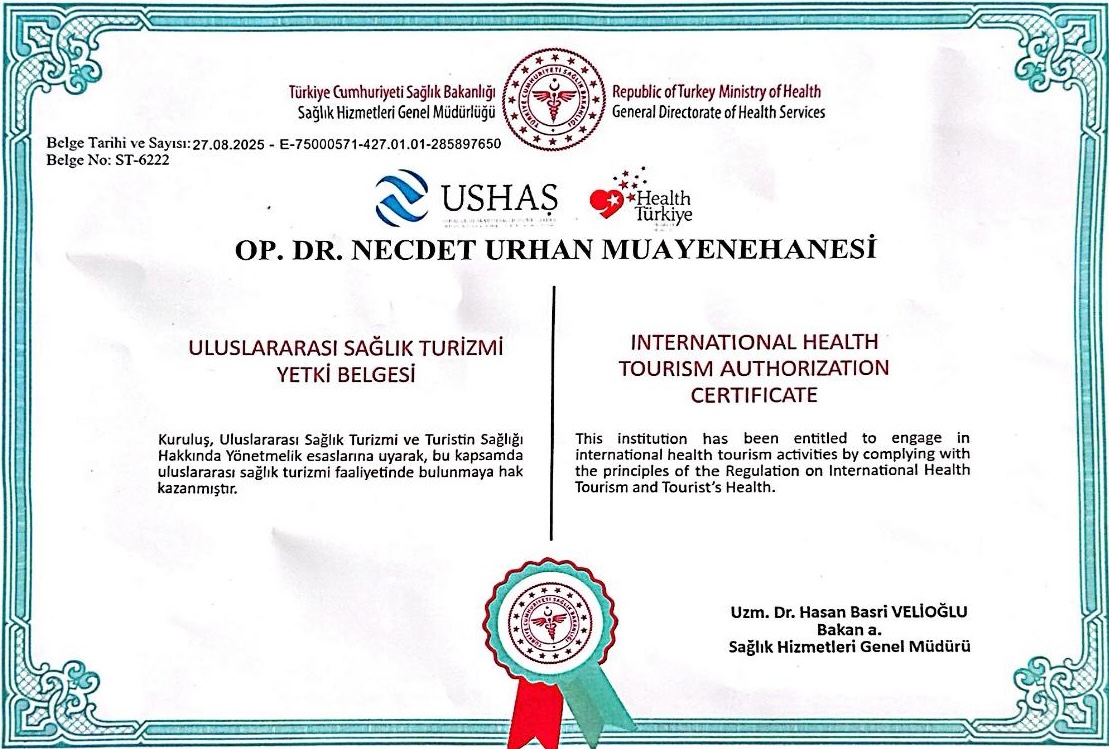
European Board of Plastic, Reconstructive and Aesthetic Surgery — the highest surgical training standard in Europe. The majority of surgeons in Antalya do not hold this credential.
Advanced Deep Plane Training
Training alongside Dr. Ben Talei (Beverly Hills) and Dr. Ozan Sözer (El Paso) — two of the world's leading deep plane surgeons. This specific lineage is rare and measurably impacts surgical safety.
Questions to ask your surgeon
How many deep plane facelifts per year? What specific training? Can you show photographs from your own cases? How do you manage haematoma or nerve complications?
9. Pre-Operative Risk Reduction: The Patient's Role
Many risk factors are modifiable — you can actively reduce your own risk before surgery.
| Timeline | Action | Why It Matters |
|---|---|---|
| 4 weeks before | Stop smoking completely | Reduces skin necrosis, infection, healing problems |
| 2 weeks before | Stop aspirin, NSAIDs, fish oil, vitamin E, ginkgo | Reduces haematoma risk |
| 2 weeks before | Optimise blood pressure if elevated | Raised BP is the primary haematoma trigger |
| Post-op | Keep head elevated for 2 weeks | Reduces swelling, supports healing |
| Post-op | Apply SPF 50+ from week 4 | Prevents scar darkening |
| Post-op | Report sudden swelling immediately | Early haematoma identification is critical |
🚨 Contact your surgeon immediately if you notice:
- Sudden, rapidly increasing swelling on one side of the face (possible haematoma)
- Fever above 38.5°C / 101.3°F
- Pain not controlled by prescribed medication
- Discharge, odour, or abnormal changes at incision sites
- Facial weakness or difficulty closing one eye
- Darkening or blistering of skin in the operated area
Related pages
10. Frequently Asked Questions
Book a Consultation — Op. Dr. Necdet Urhan
If you are considering a deep plane facelift and want to understand your personal risk profile, the most important first step is a thorough, individualised consultation. During our meeting, I review your medical history, medications, lifestyle factors, and facial anatomy — and give you an honest assessment of whether this procedure is right for you.
Medically reviewed by Op. Dr. Necdet Urhan — Plastic, Reconstructive and Aesthetic Surgery Specialist (EBOPRAS, ISAPS), Antalya, Turkey. | External references: ASPS · ISAPS · EBOPRAS · PubMed: "Thirty Years of Deep Plane Facelifts" (2025)