Lip Lift Aesthetics
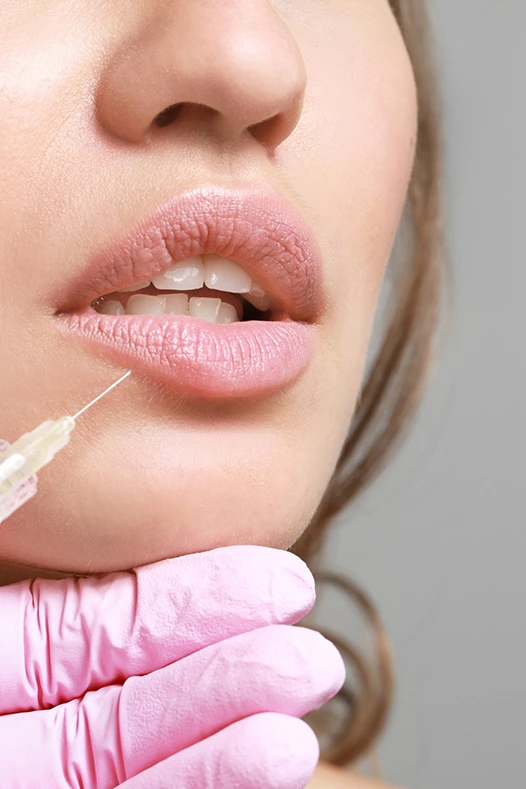
EBOPRAS-certified plastic surgeon Op. Dr. Necdet Urhan performs lip lift surgery in Antalya using the subnasal bullhorn technique — shortening the elongated upper white lip (philtrum), defining the Cupid's bow, repositioning the vermillion border upward, and creating a naturally full, youthful upper lip without the over-inflated appearance associated with filler over-treatment.
"Success in lip aesthetics comes from proportion, not volume. An elongated upper white lip makes a face appear aged and flat regardless of how much filler is used. When we restore the philtrum to its ideal 11–13 mm range through a lip lift, the upper teeth become subtly visible, the Cupid's bow sharpens, and the face revitalises as a whole."
— Op. Dr. Necdet Urhan, Plastic and Aesthetic Surgery Specialist, Antalya
Medical Disclaimer: This page is for general informational purposes only and does not constitute medical advice. A lip lift decision requires personalised examination and specialist evaluation.
What is a Lip Lift?
A lip lift is a surgical procedure that shortens the distance between the base of the nose and the upper lip (the philtrum / upper white lip). A carefully designed strip of skin is removed just below the nose, the vermillion border (red-white lip junction) is repositioned upward, and the Cupid's bow contour is simultaneously sharpened — resulting in a subtly visible show of the upper incisors at rest, and a naturally fuller upper lip without added volume.
According to Op. Dr. Necdet Urhan, lip lift differs fundamentally from filler in that it corrects a proportional deficit rather than a volume one. When filler is applied to a philtrum that is too long, the result is an over-inflated appearance that looks artificial; lip lift solves the underlying cause. The ideal philtrum length is 11–13 mm in women and 13–15 mm in men — measurements that guide planning for every patient.
| Technique | Incision Location | Best For |
|---|---|---|
| Subnasal Bullhorn | Below nose base (bull-horn shape) | Elongated philtrum, general lip lifting |
| Corner Lip Lift (Commissuroplasty) | Lip corners | Downturned lip corners (sad expression) |
| Direct Lip Lift | Just above vermillion border | Localised asymmetry, mature patients |
Anatomical Structures
Philtrum Columns
The two subtle ridges descending from the base of the nose to the Cupid's bow. Lip lift shortens the column length and advances the lip upward, directly restoring mid-face vertical proportion.
Cupid's Bow
The double-curved upper vermillion border. Lip lift directly improves the prominence and symmetry of the Cupid's bow — a dimensional change that filler cannot replicate with the same precision.
White Roll
The fine, pale band along the vermillion border. After lip lift, increased white roll visibility is one of the key signs of a successful result — producing a naturally fuller appearance without filler.
Vermillion Border
The transition line between lip skin and mucosa. Lip lift repositions this border upward, improving the definition of the lip outline and the visual "frame" of the mouth.
Nasal Sill
The horizontal line at the base of the nostrils. The subnasal bullhorn excision is placed along this line so the healed scar is concealed within the natural shadow of the nose base.
Columella and Nasolabial Angle
The nasolabial (columella-to-lip) angle ideally measures 95–110° in women and 90–95° in men. Lip lift planning accounts for this angle to ensure the result harmonises with the nose rather than distorting it.
Techniques
What Does It Correct?
Elongated Upper White Lip
Age-related or genetically long philtrum (>13 mm in women) creates a tired, flat-faced appearance. Lip lift directly shortens this distance, restoring facial proportions.
Hidden Upper Front Teeth
When the upper incisors are not visible at rest, the face reads as aged. Lip lift raises the vermillion to introduce a subtle tooth show — one of the strongest indicators of a youthful smile.
Undefined Cupid's Bow
A flattened or undefined Cupid's bow — whether age-related or structural — is addressed structurally by lip lift, producing a sharper, more symmetrical contour than filler alone.
Thin-Appearing Upper Lip
Apparent thinness caused by philtrum length rather than volume loss is best treated by lip lift. The repositioned vermillion adds apparent fullness without extra volume.
Downturned Lip Corners
Commissure ptosis creating a "sad mouth" at rest is addressed with corner lip lift — often combined with the subnasal approach in a single session.
Filler Fatigue
Patients dissatisfied with repeated lip filler — getting volume but not the shape they want — often have a philtrum proportion problem. Lip lift provides the permanent proportional solution.
Procedure: 5 Stages
Stage 1 — Proportional Analysis and Planning
Philtrum length, vermillion height, Cupid's bow geometry, incisor visibility at rest, and nose base anatomy are assessed. The excision amount and shape are designed individually — taking nasolabial angle and nasal tip projection into account so the result harmonises with the nose.
Stage 2 — Anaesthesia
Isolated lip lift is performed under local anaesthesia with sedation, allowing same-day discharge. When combined with rhinoplasty or other facial procedures, general anaesthesia is preferred.
Stage 3 — Skin Excision and Lip Advancement
The marked bullhorn template is excised; the orbicularis oris muscle is preserved. The upper lip skin is advanced superiorly. Deep fixation sutures at the muscle level may be placed to resist the natural downward pull of the lip over time.
Stage 4 — Layered Closure
Deep absorbable sutures are placed, followed by fine surface sutures. The incision line is aligned precisely along the nasal sill crease to ensure maximum scar concealment.
Stage 5 — Discharge
The patient is discharged the same day. Sutures are removed or dissolve within 5–7 days. Soft foods are recommended for the first week; normal facial expression is not restricted.
Ideal Candidate Criteria
Elongated Philtrum
The clearest single indication. A philtrum exceeding 13 mm in women or 15 mm in men responds most predictably and dramatically to lip lift.
Proportion Rather Than Volume Problem
Patients who have used filler but remain dissatisfied because their lips look "big but not right" typically have a proportional issue best solved by lip lift rather than more volume.
Hidden Upper Incisors
No visible upper teeth at rest is a strong aesthetic indication for lip lift. Restoring this "tooth show" has a rejuvenating effect disproportionate to the size of the surgery.
Realistic Expectations
Lip lift corrects proportion permanently; it does not stop ageing. A natural improvement in harmony with the patient's own facial features — not a dramatic transformation — is the appropriate goal.
General Health
Controlled chronic conditions, normal coagulation, and non-smoking (or cessation pre-operatively) are standard requirements for any facial surgical procedure.
Adequate Skin Laxity and Nasal Base Width
Sufficient skin laxity allows accurate positioning of the advanced lip. Nasal base width is assessed to ensure bullhorn excision width does not risk widening the alar base.
Advantages
Permanent Result
Lip lift creates a permanent anatomical change; unlike filler (lasting 6–12 months) it does not require retreatment — the philtrum cannot return to its original length after excision.
Natural Appearance
Because the result repositions structure rather than adding volume, there is no risk of an over-inflated or unnatural look. The outcome is harmonious with the patient's own facial features.
Multi-Dimensional Improvement
A single procedure simultaneously addresses philtrum shortening, Cupid's bow definition, white roll prominence, vermillion exposure, and upper incisor visibility — five parameters in one surgery.
Concealable Scar
The bullhorn scar falls along the nasal sill crease, where it fades to near-invisibility in the vast majority of patients by 3–6 months post-operatively.
Short Procedure Time
An isolated lip lift takes approximately 30–60 minutes under local anaesthesia plus sedation. Same-day discharge is routine.
Combinable with Multiple Procedures
Lip lift integrates seamlessly with rhinoplasty, brow lift, blepharoplasty, or facelift — enabling comprehensive single-session facial rejuvenation.
Recovery Timeline
| Period | What to Expect and Key Guidelines |
|---|---|
| Days 1–3 | Swelling and mild bruising at the upper lip and nose base. Cold compresses applied; head kept elevated. Soft foods recommended. |
| Days 4–7 | Sutures removed or dissolving. Swelling noticeably reduced. Return to work possible for desk jobs. Makeup may be applied. |
| Week 2 | Bruising and residual swelling largely resolved. Mild redness of the incision line is normal. Normal diet resumed. |
| Weeks 3–4 | Exercise restrictions lifted. Scar continues to mature; sun protection is recommended. |
| Months 3–6 | Final aesthetic result established. Scar fades and blends with the nasal sill line. Permanent proportional change fully visible from this point. |
Combined Procedures
Rhinoplasty
Nasal tip projection and columella position directly affect lip lift planning; combining rhinoplasty and lip lift in a single session is common and produces a more coherent nasal-lip harmony. Rhinoplasty →
Chin Shaping (Chinoplasty)
The chin and lip define the lower-face proportion together; lip lift plus chinoplasty is one of the most effective single-session lower-face balance combinations available. Chin Shaping →
Brow Lift
Upper and lower face rejuvenated simultaneously; lip lift + brow lift balances the upper and lower facial frame and produces a comprehensive, harmonious result. Brow Lift →
Facial Fat Transfer
While lip lift corrects proportion, fat grafting can restore volume in the lower lip or perioral area — providing both structural and volumetric perioral rejuvenation in one session. Facial Fat Transfer →
Cost and Pricing
Lip lift cost depends on the technique (isolated subnasal, corner addition, or combined), anaesthesia type, and any concurrent procedures. Transparent pricing is provided after consultation. Lip lift in Antalya is significantly more competitive than in Western Europe, with no compromise in surgical standards or aftercare. Eyelid Aesthetics combination →
Why Op. Dr. Necdet Urhan?
EBOPRAS Certification
European Board certification in Plastic Reconstructive and Aesthetic Surgery encompasses lip lift and all facial surgical procedures.
ISAPS Membership
International Society of Aesthetic Plastic Surgery membership reflects commitment to global standards in both technique and patient care.
Focused Exclusively on Facial Aesthetics
Lip lift is always planned within the context of the whole face — philtrum length, Cupid's bow, tooth show, and nasal harmony assessed together before any excision is designed.
Proportion-Guided Planning
Each patient's philtrum length, vermillion height, and lower-face proportions are measured individually; excision width and vector are determined accordingly — never a one-size template.
International Patients — Muratpaşa, Antalya
Remote video pre-assessment, in-person consultation and surgery in Antalya, and post-operative video follow-up are available. Multilingual coordination throughout.
Natural, Unoperated Appearance
Over-excision producing a lip that looks "pulled" is the most common lip lift complication. Conservative, calibrated planning ensures the result reads as natural ageing reversal — not surgical over-correction.
Risks and Complications
Scar Visibility
The bullhorn scar is pink initially and fades progressively. Hypertrophic scar tendency is managed with silicone sheeting and scar care protocol.
Over-Elevation
Excessive excision can leave the upper lip permanently rotated upward. Conservative excision amounts and careful planning prevent this complication.
Transient Swelling and Numbness
Perioral swelling for several weeks is expected. Temporary sensory changes in the upper lip typically resolve within 4–8 weeks.
Asymmetry
Early apparent asymmetry is usually differential swelling. Persistent asymmetry is rare; if present, it can be revised after full healing.
Infection
Oral hygiene protocols and prophylactic antibiotics minimise infection risk. The perioral area has excellent blood supply, supporting rapid healing.
Under-Correction
If a conservative excision under-corrects, a minor revision can be performed after full healing — preferable to over-excision which is harder to reverse.
Frequently Asked Questions
Book a Lip Lift Consultation
Contact Op. Dr. Necdet Urhan via WhatsApp to arrange your personalised assessment. Your philtrum proportions, technique options, and combination plan will be discussed at your Antalya consultation.
📍 Muratpaşa, Antalya | EBOPRAS Certified | ISAPS Member