Brow Lift Aesthetics
EBOPRAS-certified plastic surgeon Op. Dr. Necdet Urhan performs brow lift (forehead lift) surgery in Antalya to surgically reposition descended brows, correct glabellar frown lines by addressing the corrugator supercilii and procerus muscles, and rejuvenate the upper third of the face — creating a rested, alert, and naturally youthful expression.
"Brow position is one of the most critical determinants of facial youthfulness and expression. Descended brows impose a permanently tired, angry, or sad appearance, while properly positioned brows open the periorbital area, soften forehead lines, and frame the entire face with an impression of vitality."
— Op. Dr. Necdet Urhan, Plastic and Aesthetic Surgery Specialist, Antalya
Medical Disclaimer: This page is for general informational purposes only and does not constitute medical advice. A brow lift decision requires personalised examination and specialist evaluation.
What is a Brow Lift (Forehead Lift)?
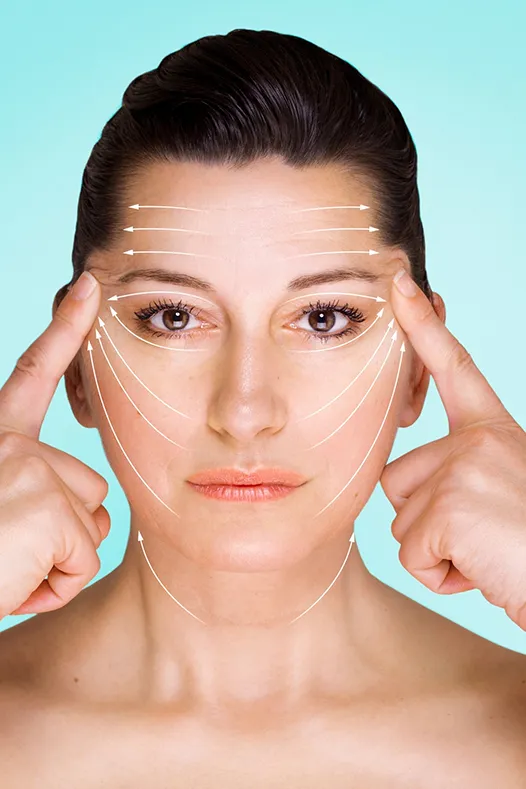
A brow lift — also called a forehead lift — is a surgical procedure that repositions descended brows back above or at the orbital rim, corrects horizontal forehead wrinkles driven by frontalis hyperactivity, and addresses glabellar frown lines by weakening the corrugator supercilii and procerus muscles. Depending on the degree of brow descent, hairline position, and patient anatomy, the procedure is performed endoscopically (most common) or via an open coronal or direct approach.
According to Op. Dr. Necdet Urhan, the forehead-brow unit is the most expression-defining structure of the upper face. Descended brows project tiredness, anger, or sadness regardless of the patient's actual mood. Restoring the brow to its anatomical ideal — with a technique calibrated to gender, facial anatomy, and hairline — produces an alert and youthful upper-face frame without the over-elevated, "surprised" look associated with poorly planned surgery.
| Technique | Incision Location | Best For |
|---|---|---|
| Endoscopic | 3–5 small scalp incisions | Moderate descent, normal/low hairline |
| Coronal | Ear-to-ear behind hairline | Severe descent, high hairline |
| Temporal / Lateral | Temple hairline incisions | Lateral brow ptosis only |
| Direct / Supra-brow | Above the eyebrow | Severe asymmetry, little/no hair |
Anatomical Structures
Frontalis Muscle
The only brow elevator — it pulls the forehead skin upward. As tone diminishes with age the brows descend. Brow lift surgically re-establishes the elevated position, relieving frontalis of its compensatory overactivity.
Corrugator Supercilii
Draws the brows medially and downward, creating vertical glabellar frown lines. During brow lift, the corrugators are weakened or divided, producing a permanent improvement in inter-brow frown lines that outlasts botulinum toxin.
Procerus Muscle
Creates transverse lines at the nasal bridge. When addressed alongside the corrugator during brow lift, it contributes to a lasting reduction in the "angry" lines between the brows and above the nose.
Lateral Orbicularis Oculi
The lateral fibres of this circumferential eyelid muscle depress the lateral brow. Selective release during brow lift facilitates more effective lateral brow elevation and opens the outer corners of the eyes.
Temporal Branch of the Facial Nerve
This nerve innervates the frontalis and lies superficially in the temporal region — the most critical structure to identify and protect during brow lift surgery. Op. Dr. Urhan plans all dissection planes with this nerve's anatomy as a primary reference.
Ideal Brow Position
In women: gently arched with the peak above the lateral limbus, at or slightly above the orbital rim. In men: flatter, at the orbital rim level. These targets guide the individualised amount and vector of lift for each patient.
Techniques
What Does It Correct?
Low / Ptotic Brows
Brows that have descended below the orbital rim project age and fatigue and can exaggerate upper eyelid heaviness. Brow lift surgically restores the brow to its youthful anatomical position.
Glabellar Frown Lines
Surgical weakening of the corrugator and procerus muscles produces a long-lasting reduction in inter-brow frown lines — far more durable than repeated botulinum toxin injections.
Forehead Horizontal Wrinkles
Deep horizontal forehead lines result partly from frontalis hyperactivity (compensating for descended brows). After brow lift removes this compensation demand, forehead lines improve substantially.
Upper Visual Field Obstruction
In severe brow ptosis, the descended brow and hooded upper lid can obstruct the superior visual field — a functional indication for brow lift in addition to the aesthetic one.
Brow Asymmetry
Height or contour differences between the two brows — whether age-related or congenital — are corrected through differential lift, applying different amounts of elevation to each side.
"Angry" or "Tired" Facial Expression
Medial brow descent creates an angry expression; lateral descent creates a tired one. Brow lift shifts the resting expression to neutral or subtly positive — without a frozen or unnatural appearance.
Procedure: 5 Stages
Stage 1 — Analysis and Technique Selection
Current brow position, hairline height, skin quality, muscle activity pattern, and upper eyelid status are assessed. The endoscopic or open technique, unilateral or bilateral approach, and whether to combine blepharoplasty are determined at this stage.
Stage 2 — Anaesthesia and Preparation
General anaesthesia or sedation is administered. The scalp incision sites are prepared; in most cases hair is not shaved, only parted minimally at incision locations.
Stage 3 — Periosteal Elevation and Muscle Correction
In the endoscopic approach, the periosteum is elevated under camera guidance; the corrugator supercilii and procerus are weakened through the same access. The brow tissue is elevated and fixed at the new position with absorbable devices or sutures.
Stage 4 — Skin Closure
Endoscopic entry points are closed with a few sutures. In the coronal technique, the excess skin flap is excised and the incision closed in layers. The hairline is preserved throughout.
Stage 5 — Dressing and Discharge
A light compressive dressing is applied. The procedure lasts 1.5–3 hours; patients are discharged the same day or the morning after. Hair washing may begin at 48–72 hours.
Ideal Candidate Criteria
Brows Below the Orbital Rim
The strongest single indication for brow lift. Moderate to severe ptosis responds most dramatically to surgical repositioning.
Deep Glabellar or Forehead Lines
Lines that cannot be adequately managed with toxin alone, or that require repeated injections every 3–6 months, benefit from the longer-lasting correction brow lift provides.
Brow-Driven Upper Lid Heaviness
Upper lid fullness is sometimes caused by the descended brow rather than excess lid skin or fat — choosing blepharoplasty in this situation would under-treat the root cause. Pre-operative brow assessment prevents this error.
General Health
Controlled chronic conditions, normal coagulation, and cessation of anticoagulants are standard pre-operative requirements for any surgical procedure.
Realistic Expectations
Brow lift corrects existing ptosis and wrinkles for many years but does not stop ageing. Gradual settling may occur over time, though the result remains better than the pre-operative baseline.
Hairline and Hair Density
Hairline position and density directly influence technique selection. Very thin hair or significant hair loss may favour a coronal or direct brow approach over an endoscopic one.
Advantages
Long-Lasting Brow Elevation
Results lasting 7–10 years or longer with the endoscopic technique — far exceeding the 3–6 month duration of botulinum toxin or the months-long effect of thread lifts.
Permanent Frown Line Improvement
Corrugator and procerus muscle treatment during the same procedure provides a sustained reduction in glabellar lines, significantly reducing or eliminating the need for repeated toxin injections.
Greater Periorbital Openness
As the brow elevates, the periorbital area opens and the eyes appear larger and more alert. This may reduce or eliminate the need for blepharoplasty in brow-driven lid heaviness.
Minimal Visible Scarring
With the endoscopic technique, all incisions are concealed within the scalp and become imperceptible after healing.
Combined Rejuvenating Effect
Brow lift can be performed in the same session as blepharoplasty, facelift, or fat grafting — addressing all thirds of the face simultaneously in a single anaesthetic episode.
Individualisable Result
The amount, vector, and zone of lift are customised to gender, facial anatomy, and the patient's aesthetic goal — ensuring a natural rather than overtreated appearance.
Recovery Timeline
| Period | What to Expect and Key Guidelines |
|---|---|
| Days 1–3 | Forehead and temporal swelling, bruising, and tightness. Head elevated during sleep; cold compresses applied. Heavy physical activity prohibited. |
| Days 4–7 | Swelling reduces significantly; sutures are removed or dissolve. Desk work may be resumed. Hair washing can begin. |
| Week 2 | Remaining swelling and bruising largely resolved. Mild scalp numbness is normal. Most patients feel comfortable returning to social activities. |
| Weeks 3–4 | Exercise restrictions lifted. Mild residual forehead firmness or altered sensation continues to resolve progressively. |
| Months 2–3 | Final result established. Absorbable fixation devices have fully dissolved. The definitive brow position and forehead contour are assessed at this visit. |
Combined Procedures
Eyelid Aesthetics (Blepharoplasty)
Low brows and redundant upper lid skin frequently coexist; brow lift + upper blepharoplasty comprehensively rejuvenates the upper face in a single session. Eyelid Aesthetics →
Deep Plane Facelift
Brow lift addressing the upper face combined with deep plane facelift addressing the mid and lower face produces the most comprehensive single-session facial rejuvenation. Deep Plane Facelift →
Facial Fat Transfer
Temple fat grafting performed concurrently with brow lift addresses both descent and hollowing of the upper third of the face in the same session. Facial Fat Transfer →
Mid-Face Lift
Treating the upper face (brow lift) and mid face (mid-face lift) simultaneously forms one of the most complete upper-to-mid facial rejuvenation combinations available. Mid-Face Lift →
Cost and Pricing
Brow lift cost depends on the technique (endoscopic vs. coronal), whether blepharoplasty or other procedures are combined, and anaesthesia type. Transparent pricing is provided following consultation. Brow lift in Antalya is available at significantly more competitive rates than in Western Europe, with no compromise in surgical standards. Facelift combination →
Why Op. Dr. Necdet Urhan?
EBOPRAS Certification
European Board certification in Plastic Reconstructive and Aesthetic Surgery covers endoscopic brow lift and all upper-face rejuvenation procedures.
ISAPS Membership
International Society of Aesthetic Plastic Surgery membership reflects commitment to evidence-based technique and ethical standards.
Focused Exclusively on Facial Aesthetics
Op. Dr. Urhan plans brow lift within the context of the whole face — brow, eyelid, and forehead together — targeting a natural, age- and gender-appropriate result.
Temporal Nerve Protection
Protecting the temporal branch of the facial nerve is the most technically demanding aspect of brow lift. This requires the anatomical precision that comes from dedicated facial surgery practice.
International Practice — Muratpaşa, Antalya
Remote pre-assessment, multilingual coordination, and video follow-up make the clinic accessible and convenient for international patients.
Natural-Looking Result
The "surprised" or over-elevated brow is the result of poor planning or technique. Op. Dr. Urhan sets conservative, gender-specific targets and preserves natural expression throughout.
Risks and Complications
Transient Sensory Change
Numbness or hypersensitivity of the forehead and scalp is common post-operatively and resolves progressively over weeks to months.
Transient Asymmetry
Differential swelling in the early post-operative period may create apparent asymmetry; this equalises as tissues settle over 2–3 months.
Temporary Hair Loss
Telogen effluvium (stress-related shedding) near the incision line may occur; this is temporary and resolves within a few months.
Over-Elevation
A "surprised" expression results from excessive or misdirected lift. Careful pre-operative planning and conservative elevation targets prevent this outcome.
Nerve Injury (Rare)
Temporal branch injury causing frontalis weakness is rare in experienced hands. Meticulous anatomical dissection and nerve identification minimise this risk.
Visible Scarring
Endoscopic scars are concealed in the scalp. Coronal or direct brow lift scars are initially more visible; they mature and are covered by hair over time.
Frequently Asked Questions
Book a Brow Lift Consultation
Contact Op. Dr. Necdet Urhan via WhatsApp to arrange your personalised assessment. Your brow position, technique options, and combination plan will be discussed in detail at your Antalya consultation.
📍 Muratpaşa, Antalya | EBOPRAS Certified | ISAPS Member