Deep Plane Facelift
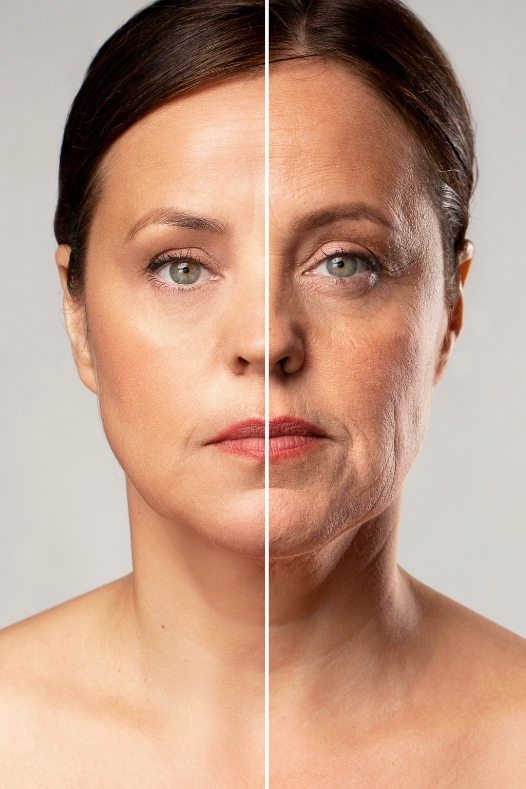
Deep plane facelift is an advanced surgical technique that addresses facial ageing at its anatomical origin rather than masking it at the surface. Instead of pulling the skin, it repositions the deep structural layers — the SMAS, retaining ligaments, and facial fat compartments — as a single composite unit. In Antalya, EBOPRAS-certified Plastic & Aesthetic Surgery Specialist Op. Dr. Necdet Urhan performs this technique while preserving each patient's individual facial identity.
"A deep plane facelift doesn't transform the face — it refreshes it. By releasing the retaining ligaments and repositioning the midface, lower face, and neck as one unit, we achieve a durability that other techniques simply cannot match. That is why, in our practice, it is the primary technique for moderate to advanced facial ageing."
Note: This page is prepared for patient information purposes. Surgical decisions, technique selection, and recovery planning must be based on an individual clinical examination.
1. What Is a Deep Plane Facelift?
A deep plane facelift is a comprehensive surgical technique that addresses facial ageing at its anatomical source. While traditional facelift techniques tighten only the skin, the deep plane approach goes beneath the SMAS layer to fully release the retaining ligaments and reposition the facial soft tissues — skin, SMAS, and fat compartments — as a single composite unit.
According to Op. Dr. Necdet Urhan, a successful deep plane facelift result depends on three elements: precise patient selection, complete release of the retaining ligaments, and repositioning of the tissues along the correct anatomical vector. When all three are achieved together, the result is a natural, long-lasting outcome that other techniques cannot replicate.
Facelift Techniques — Comparison
| Technique | Surgical Plane | Retaining Ligaments | Longevity | Ideal Profile |
|---|---|---|---|---|
| Deep Plane ★ | Sub-SMAS + deep facial plane | Fully released | 10–15 years | Moderate–advanced ageing |
| SMAS | SMAS plication / flap | Not released | 5–8 years | Moderate ageing |
| Mini Facelift | Limited SMAS, short incision | Partial | 3–5 years | Early–mild ageing |
| Classical (Skin-only) | Skin layer only | Untouched | 2–4 years | Very mild ageing |
2. Anatomical Basis of the Deep Plane Technique
What distinguishes deep plane facelift from other techniques is its holistic treatment of the face's layered structure. According to Op. Dr. Necdet Urhan, understanding how each layer ages directly determines the choice of technique.
Skin Layer
Loses elasticity and becomes lax. In deep plane surgery, minimal tension is applied to the skin — the tissue is supported by the repositioned deep structures. This directly improves scar quality and the naturalness of the result.
SMAS Layer (Primary Target)
The superficial musculoaponeurotic system — the fibromuscular layer connecting the facial muscles to the overlying skin. In deep plane surgery, the SMAS is not merely plicated; it is fully released from the underlying ligaments and repositioned to its youthful anatomical location.
Deep Facial Plane (Working Space)
The space beneath the SMAS — the anatomical zone from which this technique takes its name. Working in this plane provides direct access to the malar fat compartments and retaining ligaments.
Retaining Ligaments (The Critical Difference)
Zygomatic, mandibular, and masseteric ligaments — the fibrous anchors that tether the soft tissue to the underlying bone. Full release of these ligaments, which loosen with age, is only possible with the deep plane technique; SMAS surgery leaves them intact.
Malar Fat Compartments
The deep and superficial fat pads of the cheeks descend with age — the primary cause of midface flattening and nasolabial deepening. Deep plane repositions these pads to their original location, reducing the need for fat grafting to restore volume.
Skeletal Changes
The facial skeleton resorbs and retracts with age — reducing soft tissue support and accelerating descent. While deep plane cannot directly reverse bony changes, soft tissue repositioning is planned in relation to the underlying skeletal structure.
3. Technical Variants
Deep plane facelift is not a single fixed protocol. It can be performed in three main variants depending on the patient's degree of ageing, facial anatomy, and goals.
Standard Deep Plane
The most common approach. The zygomatic and mandibular ligaments are released; the SMAS, malar fat, and skin are elevated as a composite flap in a superolateral vector. The primary choice for moderate to advanced ageing.
Extended Deep Plane
An expansion of the standard deep plane into the temporal and midface regions. Preferred for patients with more pronounced midface descent and an advanced ageing profile. Results are more comprehensive; recovery is slightly longer.
Composite Deep Plane Flap
A variant that includes the orbicularis oculi muscle, extending the scope to periorbital ageing. Used to address lower eyelid hollowing and the lid-cheek junction. An advanced technique requiring significant surgeon experience.
4. What Does Deep Plane Facelift Correct?
Midface Descent
Loss of cheek height, flattening of the malar eminence, and hollowing at the lower eyelid-cheek junction. The malar fat compartments are repositioned to their youthful location.
Deep Nasolabial Folds
Deep creases running from the sides of the nose to the mouth corners. When the underlying tissues are released and elevated, fold depth is significantly reduced — a structural problem that filler merely masks is corrected at its source.
Jowls & Loss of Jawline Definition
Jowl formation and blurring of the mandibular contour from descending lower face soft tissue. Release of the mandibular ligament and elevation of lower face tissue restores a sharp, clean jawline.
Neck Laxity
Platysma banding, loose neck skin, and loss of the cervicomental angle. When combined with a neck lift, the transition from face to neck is restored comprehensively as a single unit.
Malar Fat Pad Descent
Downward migration of the deep fat compartments of the cheeks. Deep plane repositions these structures, restoring youthful volume without the need for filler injections.
Face–Neck Transition
Blurring of the lower jawline-to-neck transition and "double chin" appearance. Deep plane restores this junction to a clean, youthful contour; the effect is maximised when combined with neck lift.
5. The Procedure — 5 Stages
Consultation & Facial Analysis
The degree of facial ageing, skin quality, bone structure, and patient goals are evaluated. The deep plane variant (standard / extended / composite) is selected based on individual anatomy. Video pre-consultation is available for international patients.
Pre-operative Preparation
Blood tests, anaesthesia assessment, cardiology clearance (if required). Smoking must be stopped at least 4 weeks prior. Aspirin, blood thinners, and certain supplements are discontinued. Incision sites are marked on the day of surgery.
General Anaesthesia
Surgery is performed under general anaesthesia with a specialist anaesthesiologist. Vital signs are continuously monitored throughout the procedure.
Deep Plane Dissection (4–6 Hours)
Incisions begin at the temporal hairline, curve around the ear, and extend into the posterior hairline. The surgeon enters beneath the SMAS and fully releases the retaining ligaments. The skin, SMAS, and malar fat are elevated together as a single composite unit along the correct anatomical vector. The facial nerve is carefully preserved throughout. Combined procedures may extend total operating time to 5–8 hours.
Recovery & Follow-up
One night of inpatient observation follows surgery. Drains are removed on days 1–2. Sutures are taken out at days 7–10. International patients receive their fit-to-fly clearance certificate at days 10–14. English-language coordination support is available throughout the entire follow-up period.
6. Ideal Candidates
Moderate to Advanced Ageing (40–65+)
Significant midface descent, deep nasolabial folds, and jowl formation. Age is not the sole determinant — the anatomical picture and degree of ageing are what matter.
Deep Nasolabial Folds
Structural nasolabial deepening that filler or SMAS techniques cannot adequately address. Deep plane targets the anatomical source of these folds.
Midface Volume Loss
Volume loss from fat pad descent — correctable with deep plane alone or in combination with fat grafting.
Secondary (Revision) Facelift Patients
Patients who have previously had a SMAS or skin-only facelift and are experiencing recurrent sagging. Deep plane typically addresses what the previous surgery left undone.
Adequate Skin Elasticity
Skin that has not completely lost its elasticity adapts better to tissue repositioning. Skin quality is assessed during the consultation.
Realistic Expectations
The goal is to look like a younger, more rested version of yourself — not someone else. Op. Dr. Urhan's surgery is performed to refresh, not to transform.
7. Advantages of Deep Plane Facelift
10–15 Year Longevity
Because the lift is supported by strong connective tissue rather than skin tension, results last significantly longer than SMAS or mini facelift. Natural ageing continues — but the face stays years ahead of where it would otherwise be.
Low Skin Tension — Natural Appearance
The skin drapes freely over the repositioned deep tissue; the risk of a tight or mask-like appearance is minimal. The goal is a rested face, not an operated one.
Midface + Lower Face + Neck in One Session
The midface — which SMAS cannot reach — is included in the same procedure. Comprehensive, harmonious rejuvenation in a single anaesthetic session.
Superior to SMAS for Advanced Ageing
In moderate to advanced ageing — especially with deep nasolabial folds and marked midface descent — SMAS is insufficient. Deep plane is the evidence-backed choice for this profile.
Superior Scar Quality
Reduced load on incision lines from low skin tension minimises scar width and risk. Scars fade and become imperceptible in everyday life within 12–18 months.
Natural Facial Expression Preserved
The facial nerve is protected through meticulous anatomical dissection; facial movement remains completely natural. This is the most critical marker of surgical expertise in deep plane surgery.
8. Recovery Timeline
Recovery varies depending on the scope of surgery and any combined procedures. The table below summarises expectations for a standard deep plane facelift.
| Period | What to Expect | Restrictions |
|---|---|---|
| Days 1–3 | Swelling and bruising at peak. Drains removed days 1–2. Head kept elevated. | Complete rest, social isolation. |
| Days 4–7 | Bruising begins to yellow. Swelling reducing. First follow-up visit. | No heavy lifting, no bending. |
| Week 2 | Sutures removed (days 7–10). Light concealing makeup permitted. International patients cleared to fly. | No exercise, no sun exposure. |
| Weeks 3–4 | Residual swelling notably reduced. Return to desk work and light social activities possible. | Vigorous exercise still restricted. |
| Months 1–2 | 70–80% of final result visible. Tissues continue settling into new position. | Consult surgeon before resuming full exercise. |
| Months 3–6 | Final result fully apparent. Scars mature and become imperceptible in daily life. | No restrictions. |
For a comprehensive recovery guide: Facelift Recovery Guide →
9. Combined Procedures
Deep plane facelift can be performed as a standalone procedure or combined with other procedures in the same session — achieving more comprehensive, harmonious results under a single anaesthetic.
+ Neck Lift
Platysma bands, neck skin laxity, and submental fat — a harmonious result from lower face to neck. Routinely combined with deep plane in most patients.
+ Eyelid Surgery
Excess eyelid skin and under-eye bags addressed in the same session. Completes the deep plane facial rejuvenation with the eye zone.
+ Facial Fat Transfer
Restores volume to temples, cheeks, and tear troughs using the patient's own fat. Deep plane lifts; fat transfer replenishes missing volume.
+ Mid-Face Lift
Targeted cheek elevation for patients with pronounced midface descent. Can be planned alongside extended deep plane or as an additional component.
10. Deep Plane Facelift Cost in Antalya
In the United States, the total cost of a deep plane facelift typically ranges from $25,000–$50,000; in Western Europe and the UK, from €18,000–€35,000 / £18,000–£35,000. In Turkey — and Antalya specifically — the same board-certified surgical expertise, accredited hospital infrastructure, and comprehensive aftercare are available at a significantly lower cost. This difference reflects structural economic factors — not a difference in standards.
SURGEON'S FEE
EBOPRAS-certified surgeon, chosen technique
ANAESTHESIA & THEATRE
Specialist anaesthesiologist, accredited hospital
1 NIGHT INPATIENT STAY
Post-operative monitoring, nursing care
COORDINATION & FOLLOW-UP
English-speaking team, transfer, 24/7 support, fit-to-fly certificate
Deep Plane Facelift Cost — Detailed Page
Global price comparison, full package breakdown, and how to get a personalised quote — all on one dedicated page.
11. Why Op. Dr. Necdet Urhan?
EBOPRAS Certification
European Board of Plastic, Reconstructive and Aesthetic Surgery — Europe's highest-level board certification. A credential the vast majority of surgeons in Antalya do not hold.
Training with Dr. Ben Talei & Dr. Ozan Sözer
Observational training with Dr. Ben Talei (Beverly Hills) and Dr. Ozan Sözer (El Paso) — two of the world's most prominent deep plane surgeons. Surgeons with this lineage are genuinely rare.
ISAPS Membership
International Society of Aesthetic Plastic Surgery — a globally recognised professional body. Annual congresses and continuing education ensure the latest surgical evidence is applied in practice.
Exclusively Facial Surgery Practice
Not a general aesthetic practice. Dr. Urhan focuses exclusively on facial surgery, with deep plane facelift at the centre of his work.
Identity-Preserving Philosophy
Surgery is performed to refresh, not to transform. The goal is always the best version of your own face. Natural facial expression and individual identity are preserved.
International Patient Experience
Comprehensive coordination for patients from the UK, Germany, Scandinavia, and the Middle East — English-speaking team, transfer support, and fit-to-fly certificate as standard.
12. Possible Risks
Temporary Swelling & Bruising
A normal and expected response to surgery. Largely resolves within 2–4 weeks; permanent swelling is extremely rare.
Haematoma
Blood collection at the incision site — occurs in approximately 1–3% of all facelift surgeries. Timely discontinuation of blood thinners significantly reduces the risk.
Temporary Nerve Numbness
Reduced sensation around the ear is common and typically resolves fully within 3–6 months. Permanent motor nerve injury is extremely rare in experienced hands.
Scar Maturation
Incision lines may appear pink-red in the first 6 weeks. They fade and mature over 3–6 months. Low skin tension in deep plane surgery positively influences scar quality.
Asymmetry
The face is naturally asymmetric; minor post-operative asymmetries may occur. The final result is assessed once all swelling has resolved (3–6 months).
Infection / Revision (Rare)
Infection risk is minimised through antibiotic prophylaxis and sterile theatre conditions. The need for revision in experienced surgeons is approximately 1–2%.
13. Frequently Asked Questions
14. Book a Consultation
EBOPRAS Certified | ISAPS Member | Muratpaşa, Antalya
Deep Plane Facelift Consultation
For an individual technique plan based on your facial anatomy and ageing profile, meet with Op. Dr. Necdet Urhan. Send your facial photographs for a complimentary preliminary assessment.
Medical Note: This page has been prepared for patient information purposes by Op. Dr. Necdet Urhan's clinic. Information on the internet does not replace a personal clinical examination; surgical decisions, technique selection, and recovery planning must be based on a physician's assessment. Op. Dr. Necdet Urhan — EBOPRAS Certified, ISAPS Member, Plastic & Aesthetic Surgery Specialist, Antalya, Turkey.