Facelift Surgery Antalya
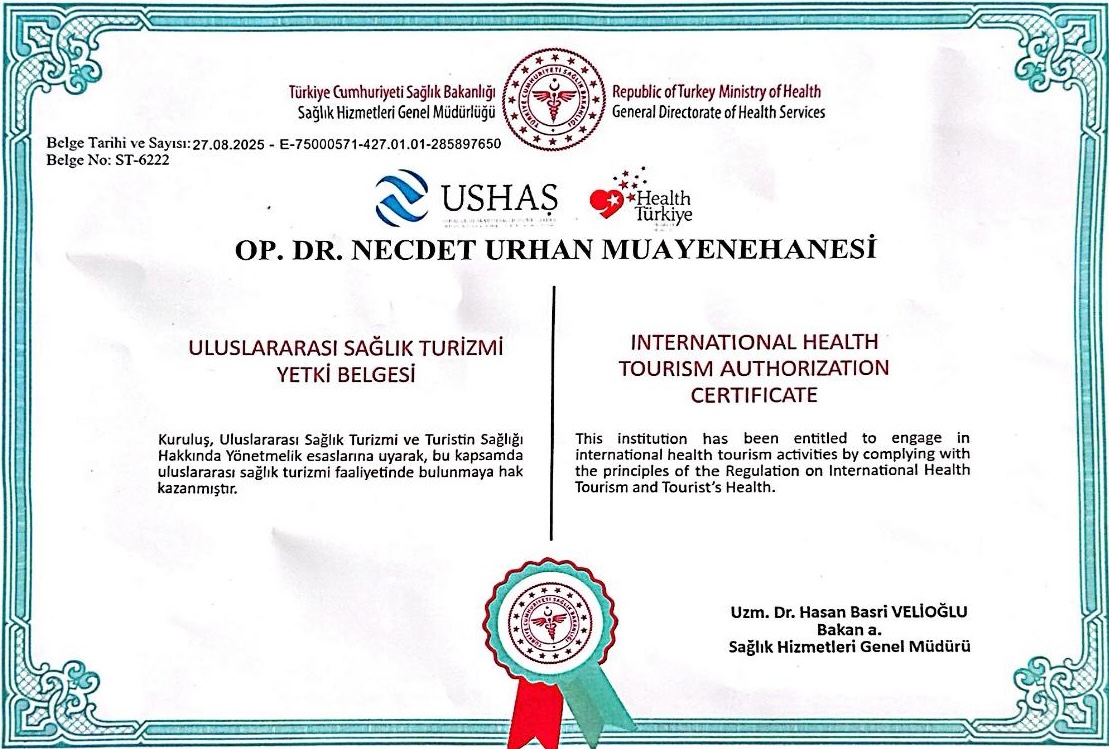
Op. Dr. Necdet Urhan is an EBOPRAS-certified Plastic and Aesthetic Surgery Specialist based in Antalya, Turkey, performing facelift surgery for both Turkish and international patients. His practice is focused exclusively on facial aesthetics — with deep plane facelift, SMAS facelift, and mini facelift among the techniques offered. The right technique is determined by individual facial anatomy and ageing pattern assessed before surgery — not by a single template applied to everyone.
"In facelift surgery, technique selection matters as much as the surgery itself. Every patient ages differently and has different goals — the task is not to apply one technique to everyone, but to match the right technique to the right patient."
— Op. Dr. Necdet Urhan, Plastic and Aesthetic Surgery Specialist, Antalya
Note: This page is for patient information purposes. The surgical decision, technique selection, and recovery planning must be determined by individual clinical assessment.
1. What Is Facelift Surgery?
Facelift surgery (rhytidectomy) is a broad family of surgical procedures that address the signs of ageing in the face and neck. The core objective is to reposition descended soft tissues, restore lost volume, and tighten the skin while preserving a natural appearance.
"Facelift" is not a single technique. It encompasses distinct surgical approaches deep plane, SMAS, mini facelift, Hollywood (minimal scar), and endoscopic — each working in different anatomical planes, suited to different ageing patterns, and requiring different recovery timelines. Which technique is appropriate depends on the patient's degree of facial ageing, skin quality, anatomy, and goals — and is determined in the pre-operative assessment, not chosen in advance.
According to Op. Dr. Necdet Urhan, a successful facelift outcome depends on three things: the right technique for the individual, anatomical precision during surgery, and correct management of the recovery period. When all three are in place, the result looks natural and lasts.
2. How the Face Ages — Anatomy
Understanding facelift surgery begins with understanding how the face is structured. The face is composed of distinct anatomical layers:
Skin
Loses elasticity with age; bears structural load when surgical tension is applied.
Subcutaneous fat
Thins and descends with age — the source of midface flattening and deepening nasolabial folds.
SMAS layer
The fibromuscular layer connecting the facial muscles to the overlying skin. The primary surgical target in modern facelift.
Retaining ligaments
Fibrous structures anchoring soft tissue to bone. When they loosen, the entire soft-tissue envelope descends.
Deep facial plane
The space beneath the SMAS layer. The anatomical zone in which deep plane facelift surgery works.
Bony structure
The facial skeleton changes with age, reducing soft-tissue support and accelerating descent.
Ageing affects all these layers simultaneously: retaining ligaments loosen, fat compartments shift, and skin loses elasticity. Traditional techniques address only the skin surface; modern facelift approaches work in deeper layers to target the anatomical origin of ageing. How deep to work — and in which plane — determines the technique.
3. Facelift Techniques — Comparison
The main facelift techniques offered at our Antalya clinic are summarised below with their key differences. Each technique is optimised for a specific patient profile.
| Technique | Surgical Plane | Longevity | Ideal Profile |
|---|---|---|---|
| Deep Plane | Below SMAS, full retaining ligament release | 10–15 years | Moderate–advanced ageing, significant midface descent |
| SMAS | SMAS plication/flap, ligaments not released | 5–8 years | Moderate ageing, lower face and neck laxity |
| Mini Facelift | Limited SMAS, short incision | 3–5 years | Early–mild ageing, jawline laxity |
| Hollywood (Minimal Scar) | Very short incision, limited tissue mobilisation | 3–5 years | Mild laxity, limited recovery time available |
| Endoscopic | Minimal incision with endoscope, deep tissue | 5–8 years | Brow and upper midface ageing, younger profile |
| Male Facelift | SMAS or deep plane, male-specific incision planning | 5–15 years (technique-dependent) | Male patients; hairline and beard preservation required |
Deep Plane Facelift
Fully releases the retaining ligaments and repositions the SMAS, fat, and skin as a single composite unit. The most comprehensive and longest-lasting technique for moderate to advanced facial ageing. The primary facelift technique at our clinic.
→ Deep Plane DetailSMAS Facelift
Tightens the SMAS layer by plication or flap mobilisation without releasing retaining ligaments. Effective for lower face and neck laxity — a reliable option for moderate ageing.
→ SMAS Facelift DetailMini Facelift
A short-scar approach with limited SMAS work targeting the jawline and lower face. Shorter recovery time. Well suited to patients with early ageing signs who are not yet ready for a full facelift.
→ Mini Facelift DetailHollywood Facelift
Also known as the minimal scar technique, this approach uses very short incisions and allows for a faster return to social life. Best for patients with mild laxity and limited time available for recovery.
→ Hollywood Facelift DetailEndoscopic Facelift
Minimal incisions with endoscopic visualisation allow deep-tissue work with minimal surface disruption. Preferred for brow and upper midface ageing in younger patient profiles.
→ Endoscopic Facelift DetailMale Facelift
Male anatomy differs from female in hairline position, beard distribution, skin thickness, and vascularisation — all of which require specific incision planning and technical adaptation. Natural masculine appearance is preserved.
→ Male Facelift Detail4. Who Is the Ideal Candidate?
There is no single "ideal age" for facelift surgery — candidacy is based on anatomy, not a number. The following profiles tend to be strong candidates:
Moderate to advanced facial laxity
Jawline loss, jowl formation, deep nasolabial folds, or loose neck skin.
Adequate skin elasticity
Skin that has not completely lost elasticity responds better to tissue repositioning.
Good general health
No uncontrolled systemic conditions that would affect anaesthesia or recovery.
Non-smoker / willing to stop
Smoking impairs tissue blood supply and healing. Cessation at least 4 weeks before surgery is required.
Realistic expectations
The goal is a younger, more rested version of yourself — not a different person.
Secondary facelift candidates
Patients who had a previous facelift and are experiencing recurrent laxity. Deep plane often corrects what the first procedure left unaddressed.
5. The Surgical Process
Facelift surgery is performed under general anaesthesia. Duration ranges from 2–6 hours depending on the technique and any combination procedures. Patients stay one night for observation and are discharged the following day.
Incision placement varies by technique, but the general principle is consistent: incisions begin in the temple hairline, curve around the ear, and extend behind it into the hairline. These positions allow scars to be concealed within natural anatomical folds where they become imperceptible over time.
Standard pre-operative preparation includes:
- Blood tests and anaesthesia assessment
- Smoking cessation at least 4 weeks before surgery
- Discontinuation of aspirin, blood thinners, and certain supplements as advised
- For international patients: video pre-consultation and a 2-week Antalya stay planned in advance
6. Recovery Timeline
Days 1–3
Peak swelling and bruising. Head kept elevated. Drains removed on days 1–2. Discomfort is manageable with prescribed medication.
Days 4–7
Bruising begins to yellow and fade. Swelling continues to reduce. Sutures and clips checked at follow-up.
Week 2
Sutures removed (days 7–10). Light concealing make-up is possible. Most international patients are cleared to fly home this week.
Weeks 3–4
Residual swelling noticeably reduced. Return to desk work and light social activities is feasible.
Months 1–2
Approximately 70–80% of the final result is visible. Tissues continue settling into their new position.
Months 3–6
Final result fully emerges. Scars mature and become imperceptible in daily life.
For detailed recovery guidance: Facelift Recovery Guide →
7. Combination Procedures
Facelift surgery can be performed alone or combined with other aesthetic procedures in the same session. Combination planning achieves a more comprehensive and harmonious result under a single anaesthetic.
Platysmal bands, neck skin laxity, and submental fat — a seamless result from lower face to neck. + Brow Lift
Elevates the descended lateral brow to open the upper third of the face. + Temporal Lift
Raises the outer brow and upper cheek for a subtle, natural "cat-eye" effect. + Facial Fat Transfer
Uses the patient's own fat to restore volume to the cheeks, temples, and tear trough. + Eyelid Aesthetics
Excess eyelid skin and under-eye bags addressed in the same surgical session. + Mid Facelift
Added for patients with pronounced midface descent requiring targeted cheek elevation.
8. Surgery vs. Non-Surgical Options
Non-surgical procedures such as Botox, fillers, and thread lifts can provide temporary improvements for mild ageing — but they do not replace facelift surgery. The key differences:
| Non-Surgical (Fillers, Threads, Botox) | Facelift Surgery | |
|---|---|---|
| Duration | 6 months – 2 years | 5–15 years (technique-dependent) |
| Target | Surface correction, volume addition | Tissue repositioning, structural restoration |
| Recovery | None / minimal | 2–4 weeks social recovery |
| Best for | Mild ageing, maintenance | Moderate–advanced laxity, lasting solution |
Non-surgical options are valuable tools — particularly for post-facelift maintenance or in the early stages of ageing. However, for structural changes such as moderate-to-advanced laxity, jawline loss, and deep nasolabial folds, surgical repositioning is required. Fillers and threads cannot genuinely restore these tissues.
9. Cost in Turkey — Why Antalya?
The cost of facelift surgery varies depending on the technique, combination procedures, and clinical setting. In the United States, the total cost of a deep plane facelift typically ranges from $25,000–$50,000 USD. In Western Europe and the UK, the equivalent is €18,000–€35,000 EUR / £18,000–£35,000 GBP.
In Turkey — and specifically in Antalya — the same board-certified expertise, accredited hospital infrastructure, and post-operative follow-up is available at a significantly lower cost. This difference is not a reflection of lower standards; it reflects a different healthcare cost structure: lower labour costs, different facility economics, and a national health system that keeps overhead down for private clinics.
Surgeon's fee
EBOPRAS-certified surgeon, chosen technique
Anaesthesia & theatre
Specialist anaesthetist, accredited hospital
1-night hospital stay
Post-operative observation and nursing care
Post-operative follow-up
Drain removal, dressing changes, 10–14 day monitoring
Coordination service
English-speaking team, transfers, 24/7 contact
Fit-to-fly clearance
Final check-up and travel clearance 10–14 days post-surgery
For a personal quote: Pricing is prepared individually based on your facial anatomy and planned procedure. Send photographs via WhatsApp or email to request a complimentary pre-assessment.
📞 +90 533 200 2664 |
✉️ info@drnecdeturhan.com |
💬 WhatsApp
10. Why Op. Dr. Necdet Urhan?
Op. Dr. Necdet Urhan is an EBOPRAS-certified Plastic and Aesthetic Surgery Specialist based in Antalya, Turkey. His practice is focused exclusively on facial aesthetics — with facelift surgery forming the core of his surgical work. A significant proportion of his patients travel from the UK, Germany, Scandinavia, and the Middle East specifically for facial rejuvenation surgery in Antalya.
EBOPRAS Certified
European Board of Plastic, Reconstructive and Aesthetic Surgery — the highest board certification in European plastic surgery.
ISAPS Member
International Society of Aesthetic Plastic Surgery — a globally recognised body for aesthetic surgery specialists.
Advanced Training
Deep plane training and observation with Dr. Ben Talei (Beverly Hills) and Dr. Ozan Sözer (El Paso).
Identity-Preserving Philosophy
Surgery is performed to refresh — not transform. Natural facial identity is always preserved.
Facial Aesthetics Only
A practice focused exclusively on facial surgery — not a generalist aesthetic clinic.
International Patient Experience
Full English-speaking coordination team for pre-op, surgery, and post-operative follow-up.
11. Potential Risks
As with every surgical procedure, facelift surgery carries risks. Swelling, bruising, temporary numbness, scar maturation, asymmetry, infection, bleeding/haematoma, and — rarely — the need for a revision are discussed in detail during the pre-operative consultation. An experienced surgical team, an accredited facility, and thorough post-operative follow-up all contribute to minimising these risks.
12. Frequently Asked Questions
13. Appointment & Contact
Op. Dr. Necdet Urhan's clinic is located in Muratpaşa, Antalya — easily accessible from Antalya International Airport and the city centre. A fully English-speaking patient coordination team is available for pre-operative consultation, hospital logistics, accommodation guidance, and post-operative follow-up throughout the stay.
To arrange a personalised consultation for facelift surgery in Antalya — covering technique options, candidacy assessment, and surgical planning — please get in touch.
Contact Information
📞 +90 533 200 2664
✉️ info@drnecdeturhan.com
💬 Message on WhatsApp
📍 Yeşilbahçe Mh. Metin Kasapoğlu Cd. Gökhan İş Mrk. B Blok Kat:3 D:14, Muratpaşa / Antalya, Turkey
Related Pages
Medical Note: This page has been prepared by Op. Dr. Necdet Urhan's clinic for patient information purposes. Information available on the internet is not a substitute for a personal clinical examination; the surgical decision, technique selection, and recovery planning must be determined by a physician assessment. Reviewed by Op. Dr. Necdet Urhan — Plastic and Aesthetic Surgery Specialist, EBOPRAS-certified, ISAPS Member, Antalya, Turkey.