Mid Facelift
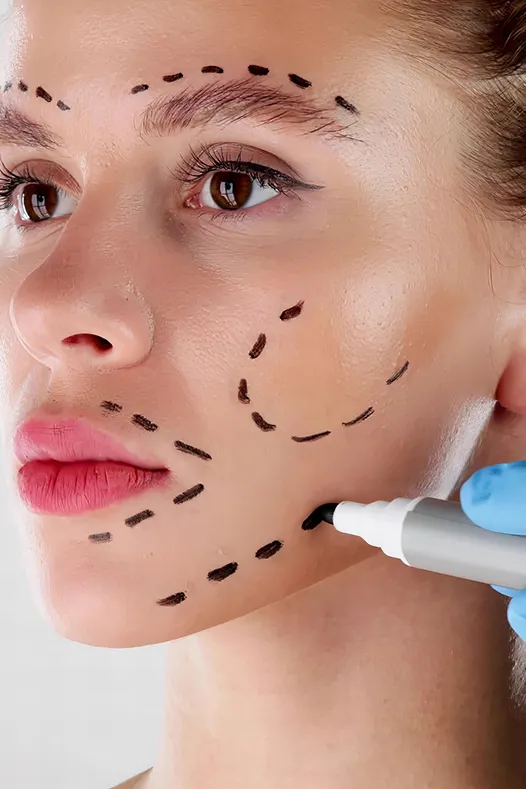
Op. Dr. Necdet Urhan is an EBOPRAS-certified Plastic and Aesthetic Surgery Specialist based in Antalya, Turkey, performing mid facelift (midface lift) surgery for both Turkish and international patients. Mid facelift targets the anatomical "middle third" of the face — the triangle formed by the lower eyelid, cheek and nasolabial fold — repositioning the descended malar fat pad and SOOF layer back to their youthful anatomical position. When executed correctly, it restores three-dimensional fullness, cheek projection and vitality without creating a tight or operated appearance.
"Midface ageing is not just about sagging — it advances alongside volume loss. Simply lifting the tissue is not enough; the malar fat pad must be repositioned to its anatomical plane and the volume balance must be considered. A midface lift that does not address this loses its result quickly."
— Op. Dr. Necdet Urhan, Plastic and Aesthetic Surgery Specialist, Antalya
Note: This page is for patient information purposes. The surgical decision and technique selection must be determined by individual clinical assessment.
1. What Is Mid Facelift (Midface Lift)?
Mid facelift is a surgical rejuvenation procedure that targets the anatomical "middle third" of the face — the triangle defined by the lower eyelid, cheek and nasolabial fold. As this region descends with gravity and loses volume, the cheeks flatten, the under-eye-to-cheek boundary sharpens, and the nasolabial folds deepen.
According to Op. Dr. Necdet Urhan, mid facelift is not simply about "lifting" — it is about repositioning the malar fat pad and SOOF (Sub-Orbicularis Oculi Fat) layer back to their youthful anatomical position, thereby re-establishing the three-dimensional structure the face had in youth. This distinction is why superficial techniques lose their effect quickly, while deep-plane repositioning delivers lasting results.
Mid facelift can be performed as a standalone procedure when the lower face and neck are healthy, or as part of a comprehensive facial rejuvenation plan combined with blepharoplasty, deep plane facelift, or fat transfer.
2. Anatomy of Midface Ageing
According to Op. Dr. Necdet Urhan, midface ageing results from three overlapping anatomical mechanisms that trigger and reinforce one another:
Malar fat pad descent
The fat pad that gives the cheeks fullness and height in youth descends under gravity and ligamentous laxity. Cheeks flatten, and the lower lid-to-cheek boundary becomes visible.
SOOF layer laxity
The Sub-Orbicularis Oculi Fat layer loosens and descends forward — increasing the apparent under-eye puffiness and erasing upper cheek fullness.
Nasolabial fold deepening
As malar tissue descends, it loads onto the nasolabial fold — deepening and elongating it. Filler alone cannot permanently correct this; the underlying structure must be repositioned.
Tear trough shadow
As the midface tissue descends, the lid-cheek junction sharpens and creates a persistent shadow beneath the eye — giving a chronically tired appearance.
Facial skeletal resorption
Bone volume loss in the facial skeleton creates less structural support for the overlying soft tissues — compounding the descent of the malar fat pad.
Skin quality change
Collagen and elastin loss reduces skin resilience — accelerating soft tissue descent and making surface changes more visible.
3. Which Technique? — SOOF Lift and Malar Fat Pad Elevation
According to Op. Dr. Necdet Urhan, technique selection in midface surgery is guided by each patient's anatomy and ageing pattern. Simply lifting the skin produces no lasting result — the structural layers beneath must be repositioned to their anatomical plane.
SOOF Lift
The Sub-Orbicularis Oculi Fat layer is directly addressed, suspended upward and laterally. Smooths the lower lid-to-cheek junction, restores upper cheek contour — the defining step that surface-only techniques cannot achieve.
Malar Fat Pad Elevation
The flattened and descended malar tissue is elevated to its anatomical position. Restores the natural cheek height and light reflection the face had in youth.
Endoscopic Mid Facelift
Using an endoscope via temporal scalp or lower lid access, deep midface layers are addressed with minimal scar. Preferred for early-to-moderate midface ageing.
Open Mid Facelift (Combined with Lower Blepharoplasty)
Access via the lower lid incision allows simultaneous correction of under-eye bags and midface laxity — both addressed through a single approach in one session.
4. How Is the Surgery Performed?
Mid facelift is performed under general anaesthesia or sedation. As a standalone procedure it takes approximately 1.5–2 hours; when combined with blepharoplasty or deep plane facelift the duration extends accordingly. Most patients are discharged the same day or after one overnight stay.
Approach selection
Based on the patient's anatomy, the access route is chosen: transconjunctival or subciliary lower lid incision, temporal scalp incision, or endoscopic entry. Each has distinct advantages — no single technique suits every patient.
Deep layer dissection
Dissection proceeds to the periosteal or deep fascial plane — releasing the malar fat pad and SOOF layer. This is the step that superficial techniques omit, and the step that determines longevity.
Vector determination and tissue elevation
The midface tissue is repositioned upward and slightly lateral — toward its youthful anatomical position. The correct vector produces a natural result; an incorrect one creates a swept or operated look.
Deep fixation sutures
Tissues are secured in their new position with deep fixation sutures — load is borne by the deep structures, not the skin. Without this step, tissue re-descends over time.
Closure and volume assessment
Incisions are meticulously closed. If volume deficit is present, fat transfer is added in the same session to complete the three-dimensional rejuvenation.
5. Who Is the Ideal Candidate?
Cheek descent and flattening
Patients who have lost the cheek projection and height they had in youth — cheeks that have flattened and descended, erasing the natural convexity.
Deep nasolabial folds
Folds between the nose and mouth corners that have deepened as malar tissue descended — not amenable to permanent correction by filler alone.
Visible lid-cheek junction
A pronounced demarcation between the lower lid and cheek — caused by midface tissue descent — creating a persistent shadow beneath the eye.
Early-moderate ageing, healthy lower face
Patients with significant midface ageing but no marked lower face or neck laxity — mid facelift alone may be sufficient without full facelift.
Good general health
No uncontrolled systemic conditions affecting anaesthesia or healing.
Non-smoker / willing to stop
Smoking must stop at least 4 weeks before and after surgery — it directly impairs tissue circulation and healing.
6. Mid Facelift vs Fat Transfer vs Deep Plane — Comparison
According to Op. Dr. Necdet Urhan, these three options are not alternatives to one another — they are frequently complementary. The correct choice or combination is determined by a full clinical assessment of the patient's facial anatomy.
| Criterion | Mid Facelift | Fat Transfer | Deep Plane Facelift |
|---|---|---|---|
| Target zone | Cheek, lower lid, nasolabial fold | Any area of volume deficit | Mid + lower face + neck |
| Primary effect | Tissue elevation and repositioning | Volume addition and fullness | Structural lift + deep correction |
| Sagging correction | Effective for moderate laxity | Supportive for mild laxity | Most comprehensive for advanced laxity |
| Longevity | 5–8 years | Long-lasting (retained fat is permanent) | 8–12 years |
| Recovery | 2–3 weeks | 1–2 weeks | 3–4 weeks |
| Combination | With blepharoplasty, fat transfer, deep plane | Combinable with any procedure | With midface, neck, blepharoplasty |
According to Op. Dr. Necdet Urhan, the most frequently chosen combination is mid facelift + fat transfer: elevation corrects the descent, fat transfer restores volume balance — and a single recovery period delivers a comprehensively rejuvenated result.
7. Advantages
Three-dimensional rejuvenation
Not just skin tightening — the malar fat pad and SOOF are repositioned, re-establishing the three-dimensional structure of the youthful face.
Natural appearance
Tissue lifted in the correct anatomical vector does not look tight, swept, or operated — the patient simply looks fresher and younger.
Permanent nasolabial fold improvement
The nasolabial fold that filler can only temporarily soften is surgically and permanently reduced when the malar tissue is repositioned upward.
Smoothed lid-cheek junction
SOOF elevation softens the sharp lid-cheek demarcation and reduces the persistent shadow beneath the eye.
Concealed incisions
Depending on the approach, incisions are hidden inside the lower lid, within the temporal hairline, or through endoscopic ports — all become invisible in daily life.
Highly combinable
Combines with blepharoplasty, fat transfer, or deep plane facelift in a single session — one anaesthetic, one recovery period, comprehensive result.
8. Recovery Timeline
Days 1–3
Swelling and bruising peak around the cheeks and eye area. Head kept elevated. Discomfort is mild-to-moderate and managed with oral medication.
Days 4–10
Bruising begins to yellow and fade. Sutures removed at days 5–7. Light indoor activities are manageable.
Weeks 2–3
Most swelling resolves. International patients are typically cleared to fly home at days 12–14. Return to work and daily activities begins.
Weeks 4–6
Swelling largely resolved. Full return to social life. Visible improvement in cheek contour begins to be appreciated.
Months 3–6
Final result established. Cheek contour, lid-cheek junction smoothing, and nasolabial fold improvement are fully visible.
9. Combination Procedures
Lower blepharoplasty combined with mid facelift — lid and cheek addressed together through the same access route. + Facial Fat Transfer
Elevation + volume: descent and volume loss corrected together in a single session. + Deep Plane Facelift
When both mid and lower face are ageing — comprehensive rejuvenation in a single session. + Neck Lift
Mid face and neck addressed together for total facial and cervical rejuvenation.
10. Cost in Turkey — Why Antalya?
The cost of mid facelift varies depending on the technique used and any combination procedures. In the USA, total costs typically range from $7,000–$18,000 USD. In Western Europe, the equivalent is €6,000–€15,000 EUR.
In Turkey — and specifically in Antalya — the same board-certified surgical expertise and accredited hospital infrastructure is available at significantly lower cost. A typical package includes:
Surgeon's fee
EBOPRAS-certified surgeon, chosen technique
Anaesthesia & theatre
Specialist anaesthetist, accredited hospital
Accommodation if needed
Same-day or one overnight stay
Post-operative follow-up
Suture removal, dressing checks, 12–14 day monitoring
Coordination service
English-speaking team, transfers, 24/7 contact
Fit-to-fly clearance
Final check-up and travel clearance at days 12–14
For a personal quote: Pricing is prepared individually based on your facial anatomy and the procedures planned. Send photographs via WhatsApp or email to request a complimentary pre-assessment.
📞 +90 533 200 2664 |
✉️ info@drnecdeturhan.com |
💬 WhatsApp
11. Why Op. Dr. Necdet Urhan?
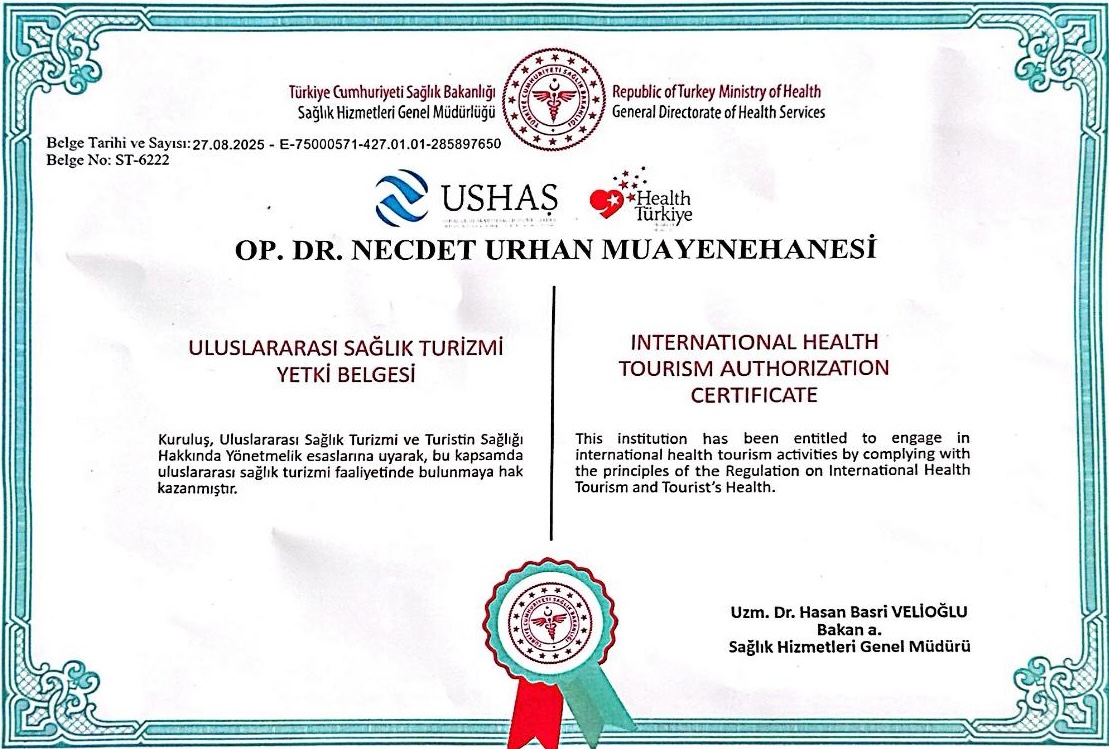
Op. Dr. Necdet Urhan is an EBOPRAS-certified Plastic and Aesthetic Surgery Specialist based in Antalya, Turkey. His practice is focused exclusively on facial aesthetics — mid facelift, deep plane facelift, and blepharoplasty forming the core of his surgical work. A significant proportion of his patients travel from the UK, Germany, and Scandinavia specifically for facial rejuvenation surgery in Antalya.
EBOPRAS Certified
European Board of Plastic, Reconstructive and Aesthetic Surgery — the highest board certification in European plastic surgery.
ISAPS Member
International Society of Aesthetic Plastic Surgery member.
Facial Aesthetics Only
Not a generalist clinic — a practice focused exclusively on the face.
Three-Dimensional Rejuvenation Philosophy
Not just skin tightening — structural layers are addressed, delivering long-lasting, natural results.
12. Potential Risks
Potential risks of mid facelift include: swelling, bruising, temporary numbness or altered sensation, asymmetry, scar maturation, infection, haematoma, temporary nerve irritation, and — rarely — the need for revision. An experienced surgical team, an accredited facility, and thorough pre- and post-operative care all contribute to minimising these risks. Each risk is discussed in detail during the consultation.
13. Frequently Asked Questions
14. Appointment & Contact
Op. Dr. Necdet Urhan's clinic is located in Muratpaşa, Antalya — easily accessible from Antalya International Airport and the city centre. A fully English-speaking patient coordination team is available for pre-operative video consultations, hospital logistics, accommodation guidance, and post-operative support throughout the stay.
Contact Information
📞 +90 533 200 2664
✉️ info@drnecdeturhan.com
💬 Message on WhatsApp
📍 Yeşilbahçe Mh. Metin Kasapoğlu Cd. Gökhan İş Mrk. B Blok Kat:3 D:14, Muratpaşa / Antalya, Turkey
Related Pages
Medical Note: This page has been prepared by Op. Dr. Necdet Urhan's clinic for patient information purposes. Information available on the internet is not a substitute for a personal clinical examination; the surgical decision and technique selection must be determined by a physician assessment. Reviewed by Op. Dr. Necdet Urhan — Plastic and Aesthetic Surgery Specialist, EBOPRAS-certified, ISAPS Member, Antalya, Turkey.