SMAS Facelifte Antalya
EBOPRAS-certified plastic surgeon Op. Dr. Necdet Urhan performs SMAS facelift surgery in Antalya, targeting the Superficial Musculo-Aponeurotic System (SMAS) for a structurally sound, long-lasting rejuvenation that addresses the anatomical source of facial ageing, not just the skin surface.
"The SMAS is the foundation of a lasting facelift. Lifting only the skin is like painting over a cracked wall — the SMAS correction addresses the root cause of facial sagging and delivers results that remain natural for many years."
— Op. Dr. Necdet Urhan, Plastic, Reconstructive and Aesthetic Surgery Specialist, Antalya
Medical Disclaimer: This page is for general informational purposes only. SMAS facelift suitability requires in-person assessment and expert evaluation.
What Is a SMAS Facelift?
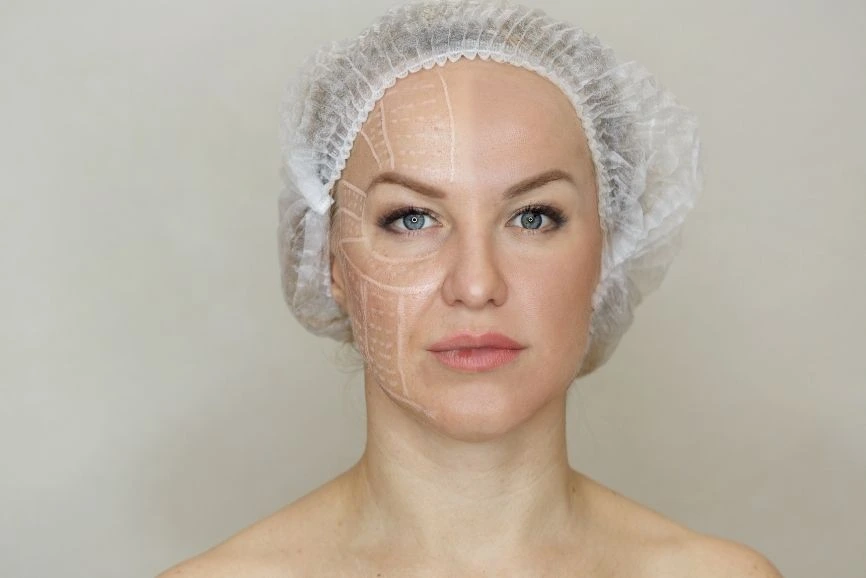
A SMAS facelift (Superficial Musculo-Aponeurotic System facelift) is a surgical facial rejuvenation technique that works on the deeper structural layer of the face — the SMAS — rather than simply pulling the skin. The SMAS is a continuous fibromuscular layer that connects the facial muscles to the overlying skin; when it descends with age, the skin and soft tissues sag as a consequence. Correcting the SMAS repositions these structures at their anatomical source and produces results that are both more natural-looking and significantly longer-lasting than a simple skin lift.
According to Op. Dr. Necdet Urhan, a SMAS-based approach is the current gold standard in facelift surgery because it treats the underlying cause rather than the symptom. The incision runs along the hairline and around the ear — carefully hidden in natural landmarks — allowing the surgeon to access and reposition the SMAS before trimming excess skin with minimal tension.
| Feature | SMAS Facelift | Skin-Only (Classic) Lift |
|---|---|---|
| Layer Addressed | SMAS + skin | Skin only |
| Results Duration | 7–12 years | 3–5 years |
| Natural Appearance | Excellent — no skin over-pull | Risk of "windswept" look |
| Complexity | Higher — specialist required | Lower |
Key Anatomical Structures
SMAS — Superficial Musculo-Aponeurotic System
A continuous fibromuscular layer connecting the facial muscles to the skin. As it descends with ageing, the entire face sags. Repositioning the SMAS corrects sagging at its structural origin.
Platysma
The platysma is the cervical extension of the SMAS. With age it separates, forming visible bands in the neck. Platysmaplasty (platysma repair) is frequently combined with SMAS facelift to rejuvenate the neck.
Retaining Ligaments (Osteocutaneous)
Fibrous attachments (zygomatic, mandibular) that anchor soft tissue to bone. As these weaken or stretch, jowls form and the midface descends. SMAS surgery releases and resets these anchors.
Facial Nerve Branches (N. Facialis)
The temporal, zygomatic, buccal, marginal mandibular and cervical branches of the facial nerve must be identified and preserved throughout the SMAS dissection. Experienced surgical anatomy knowledge is essential.
Subcutaneous Fat
Age-related fat compartment descent and volume loss alter facial contour. SMAS repositioning restores natural fat compartment position; fat transfer may be added for volume restoration.
Cervicomental Angle
The chin-to-neck angle (ideally 90–120°) is a key marker of facial youth. Neck component of SMAS facelift restores this angle through platysmaplasty and submental contouring.
SMAS Techniques
What Does It Correct?
Jowls and Lower Face Sagging
SMAS repositioning lifts jowl tissue back above the mandibular border, restoring a clean jawline definition that skin-only lifting cannot reliably achieve.
Neck Laxity and Platysma Bands
Platysmaplasty combined with SMAS facelift addresses platysma banding and cervical skin laxity, restoring the cervicomental angle and a clean neck profile.
Deep Nasolabial Folds
Extended SMAS dissection with release of zygomatic ligaments elevates midface tissue, significantly improving nasolabial fold depth at its structural origin.
Marionette Lines
The vertical lines descending from mouth corners are significantly reduced as the SMAS and lower face soft tissues are repositioned superolaterally.
Midface Descent
Deep SMAS release allows the descended malar fat pad and midface tissues to be repositioned to a more youthful, elevated location — restoring cheek volume position.
General Facial Skin Laxity
After the SMAS is repositioned, excess skin is trimmed with minimal tension — eliminating the "pulled" appearance associated with outdated skin-only techniques.
5-Stage Procedure
Stage 1 — Pre-operative Evaluation
Facial anatomy, skin quality, SMAS descent, jowl volume, neck profile, ligament laxity and overall health are comprehensively assessed. SMAS technique selection (plication, SMASectomy, or extended SMAS) is determined based on individual anatomy and ageing pattern.
Stage 2 — Anaesthesia and Patient Preparation
General anaesthesia is administered. Pre-operative markings are made along the hairline, pre-auricular and post-auricular landmarks. A dilute local anaesthetic with epinephrine is infiltrated to reduce bleeding.
Stage 3 — Incision and Skin Flap Elevation
The incision is placed within the hairline, continues around the ear and behind it into the posterior hairline. A skin flap is elevated in the subcutaneous plane to expose the SMAS.
Stage 4 — SMAS Repositioning and Platysmaplasty
The selected SMAS technique is executed: plication, SMASectomy or deep SMAS release. The SMAS is sutured in a superolateral vector. Platysmaplasty is performed if the neck component is included. Submental liposuction is performed if indicated.
Stage 5 — Skin Trimming, Closure and Recovery Start
Excess skin is trimmed without tension and the incisions are closed meticulously. A compression bandage is applied. One night of hospital observation is typically recommended. Detailed post-operative care instructions are provided.
Ideal Candidate Criteria
Moderate to Advanced Facial Ageing
Jowling, lower face descent, neck laxity and nasolabial fold deepening are the most common indicators. SMAS facelift addresses all of these at their structural source.
Good General Health
Cardiovascular health, anaesthesia fitness and absence of uncontrolled chronic disease. Blood thinners are stopped pre-operatively. A thorough pre-surgical health assessment is conducted.
Non-Smoker or Willing to Quit
Smoking significantly impairs skin circulation and healing. Cessation at least 4–6 weeks before and after surgery is mandatory for safe outcomes.
Realistic Expectations
The goal is to appear significantly younger and refreshed while looking naturally oneself — not a different person. Understanding this distinction is key to satisfaction.
Stable Body Weight
Significant weight fluctuations after surgery can alter results. Patients near or at their stable weight are the best candidates.
Recovery Time Available
Social recovery requires 10–14 days. Patients who can plan this downtime will achieve the best experience and result.
Advantages
Addresses the Root Cause
By targeting the SMAS layer rather than the skin, the procedure corrects the anatomical source of sagging — not merely its surface appearance.
Long-Lasting Results
SMAS-based correction typically maintains its effect for 7–12 years — substantially longer than skin-only techniques.
Natural Appearance
Repositioning rather than over-pulling the skin means the face looks younger without the tell-tale "tightened" or "windswept" appearance.
Comprehensive Lower Face Rejuvenation
A single procedure addresses jowls, nasolabial folds, marionette lines, jawline, and neck — simultaneously and in a coordinated manner.
Highly Combinable
SMAS facelift can be combined with fat transfer, eyelid surgery, brow lift or rhinoplasty in the same session to address all dimensions of facial ageing.
Gold Standard Technique
SMAS-based facelifts are the most widely published and validated technique in modern aesthetic surgery, consistently demonstrating superior outcomes over skin-only approaches.
Recovery Timeline
| Period | Expected Status and Guidelines |
|---|---|
| Days 1–3 | Swelling, bruising and tightness expected. Head elevated; compression bandage worn. 1 night of hospital stay recommended. |
| Days 4–10 | Swelling reduces significantly. Drains (if used) removed. Sutures checked and removed. |
| Weeks 2–3 | Social presentability typically restored. Residual swelling continues to subside. Desk work return possible. |
| Months 1–3 | Lifting results become increasingly visible as tissue softens. Incision lines fade progressively. |
| Months 3–6 | Final result fully established. Jawline, neck profile and overall rejuvenation achieve permanent form. |
Common Combinations
Deep Plane Facelift
An extension of the SMAS approach — when ligament release and deeper structural repositioning provide the optimal result for advanced ageing. Deep Plane →
Neck Lift Surgery
Platysmaplasty and neck skin correction are frequently integrated with SMAS facelift to complete the lower face and neck rejuvenation. Neck Lift →
Facial Fat Transfer
Volume restoration with autologous fat complements structural lifting — addressing both sagging and volume loss in a single session. Fat Transfer →
Eyelid Surgery (Blepharoplasty)
Upper and lower eyelid correction is commonly combined with SMAS facelift to achieve balanced facial rejuvenation. Eyelid Surgery →
Cost and Pricing
SMAS facelift cost depends on the selected technique, whether combined procedures are included, and individual anatomy. Transparent, personalised pricing is provided following consultation.
Factors Affecting Price:
- SMAS technique selected (plication, SMASectomy, deep SMAS)
- Inclusion of neck lift / platysmaplasty
- Combined procedures (fat transfer, eyelid surgery, brow lift)
- Anaesthesia duration and hospital stay
SMAS facelift in Antalya offers equivalent surgical quality to Western European and North American clinics at significantly more competitive rates. Facelift Overview →
Why Op. Dr. Necdet Urhan?
EBOPRAS Certification
SMAS facelift requires advanced surgical anatomy knowledge and technical precision. Op. Dr. Urhan holds European Board certification confirming these competencies.
ISAPS Membership
International Society of Aesthetic Plastic Surgery membership ensures continuous access to the latest evidence-based facelift innovations and technique refinements.
Anatomical Expertise
Safe SMAS surgery demands expert knowledge of facial nerve anatomy. Op. Dr. Urhan's training and experience enable meticulous nerve preservation throughout the procedure.
Technique Versatility
Plication, SMASectomy, extended SMAS and deep plane techniques are all performed — the right technique is selected for each patient's individual anatomy, not a one-size-fits-all approach.
International Patient Care — Muratpaşa, Antalya
Multilingual team, video consultation, transfer coordination and remote post-operative follow-up — a complete, comfortable experience for international patients.
Individualised Surgical Planning
No two faces age alike. Every SMAS facelift plan is tailored to the patient's unique anatomy, descent pattern and aesthetic goals — never a template approach.
Risks and Complications
Haematoma
Blood collection under the skin flap. Risk is minimised by stopping blood thinners pre-operatively and maintaining blood pressure control. Most common facelift complication overall, but managed safely with drainage if needed.
Temporary Facial Nerve Weakness
Transient weakness or altered sensation in a nerve branch area. Resolves in most cases within weeks to months. Permanent nerve injury is rare in experienced hands.
Visible Scarring
Incisions are placed in natural landmarks and typically fade well. Hypertrophic scarring is uncommon; smoking significantly increases this risk.
Skin Necrosis
Impaired skin circulation leading to tissue loss. Strongly associated with smoking. Tension-free closure and optimal flap design minimise this risk in non-smokers.
Asymmetry
Minor asymmetries are common in the early healing phase and typically self-resolve. Significant asymmetry is rare with meticulous intraoperative assessment.
Hair Loss near Incision
Temporary hair shedding (telogen effluvium) around incision lines. Usually self-resolving within 3–6 months.
Frequently Asked Questions
Book a SMAS Facelift Consultation in Antalya
Your facial anatomy and ageing profile will be evaluated in detail with Op. Dr. Necdet Urhan to determine the most suitable SMAS approach for you.
📍 Muratpaşa, Antalya | EBOPRAS Certified | ISAPS Member